

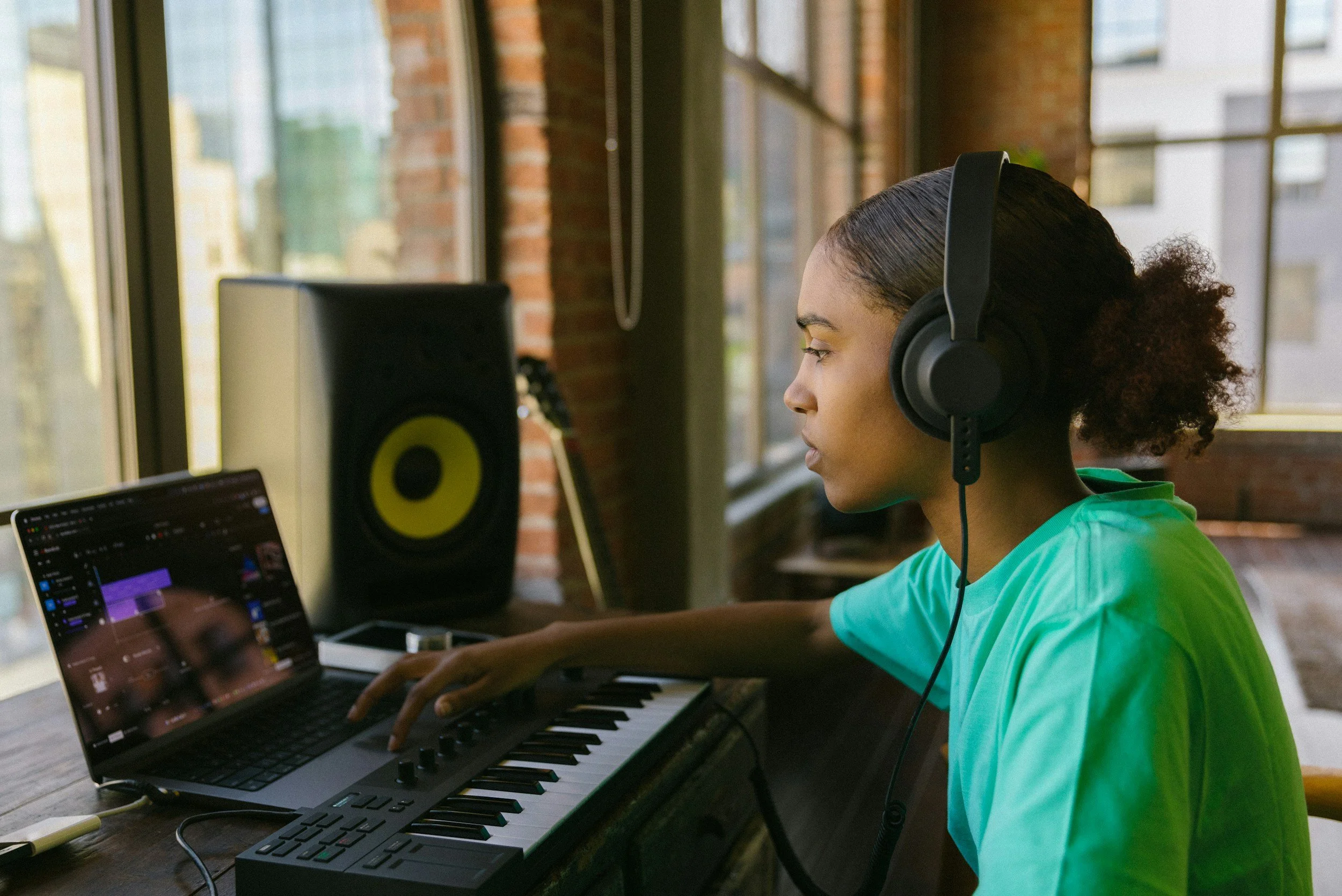
Music Creation

The UME Music Creation Pathway is a progressive framework designed to develop creativity, musical understanding and confidence in creating original music.
Teachers - Everything you need to teach creative music with confidence.
Designed for teachers who want to include creative music-making in lessons without needing a separate composition program. Guided activities, worked examples, assessment tasks and certification are all included.
Students may complete the pathway using any instrument, voice, digital platform or combination of musical resources.
The pathway combines:
• guided learning
• practical music creation activities
• structured creative development
• contemporary musicianship
• assessment and certification
Students develop skills in:
• rhythm
• melody
• harmony
• texture
• structure
• notation
• stylistic awareness
• musical communication
• creative independence
The pathway is designed to be:
• flexible
• accessible
• creativity-focused
• student-friendly
• teacher-friendly
• internationally accessible
• suitable for contemporary and classical musicians
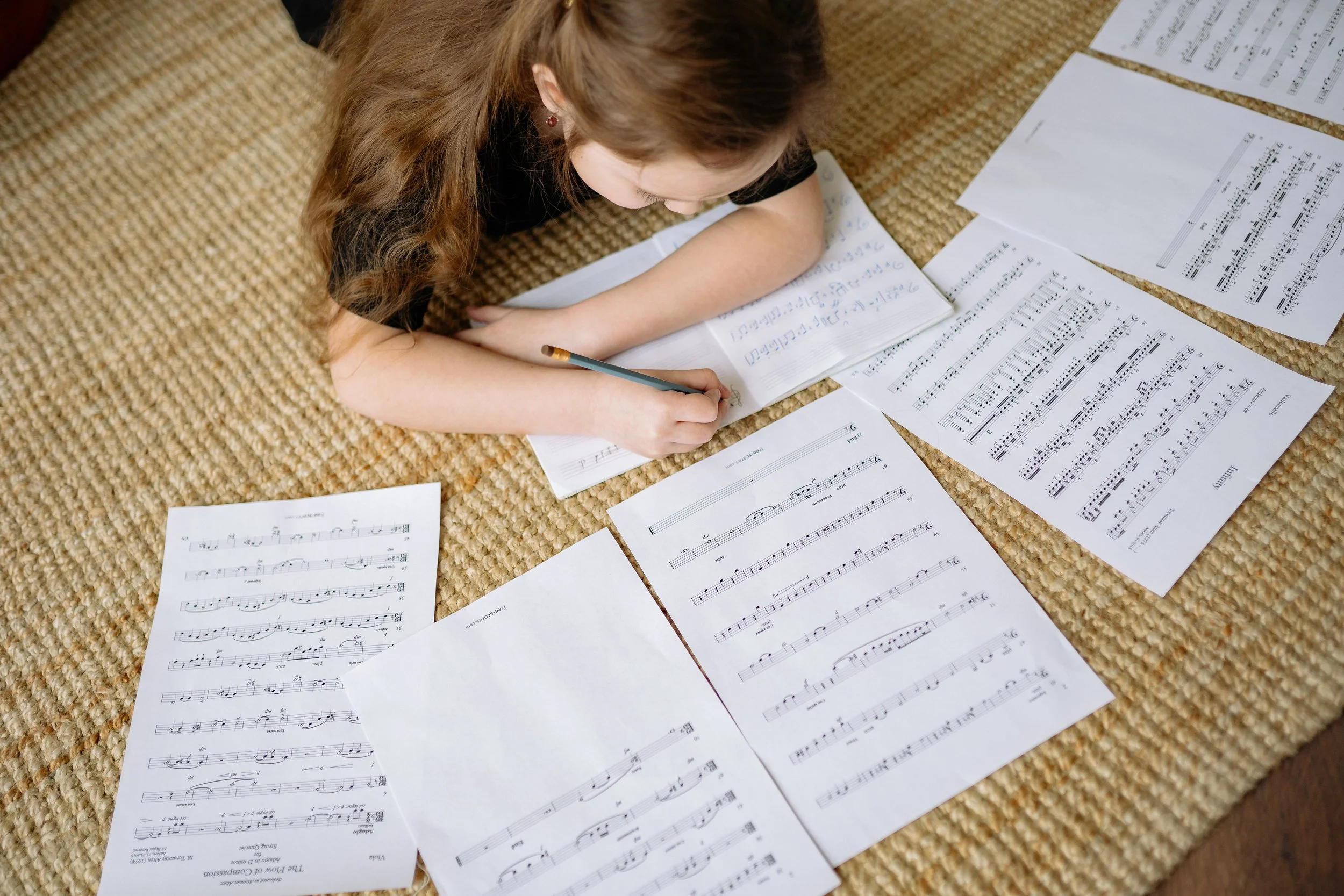
Students may present their work through:
• Video performance
• Audio files
• DAW playback
• Graphic notation
• Or a combination of formats depending on the level
Notation supports creativity within the UME framework and is introduced progressively throughout the pathway.


PROGRAM STRUCTURE
Each level contains four assessment areas:
Rhythm Activities
Melody & Musical Idea Development
Set Music Creation Task
Free Choice Music Creation Task
Students gradually develop their creative and musical skills through a range of guided activities and original music projects.
Beginning at Grade 3, students may optionally include a short spoken or written reflection explaining their creative choices and musical ideas.
SUBMISSION FORMAT
Students submit:
• video performance, playback or presentation of each task
• supporting notation, graphic representation, screenshots, chord charts or other materials where appropriate
Traditional notation is introduced progressively throughout the pathway and is not required in the Preliminary, Grade 1 or Grade 2 levels.
ASSESSMENT CATEGORIES
All tasks are assessed according to:
• creativity and originality
• musical organisation
• understanding of musical concepts
• structural development
• stylistic awareness
• communication and expression
At the lower levels, creativity, musical communication and imaginative thinking are prioritised above notation and technical presentation.
Many teachers feel confident teaching performance skills but less certain when it comes to helping students create their own music. Our Guided Assessment Packs provide the structure, examples and support needed to make creative music-making accessible and enjoyable.
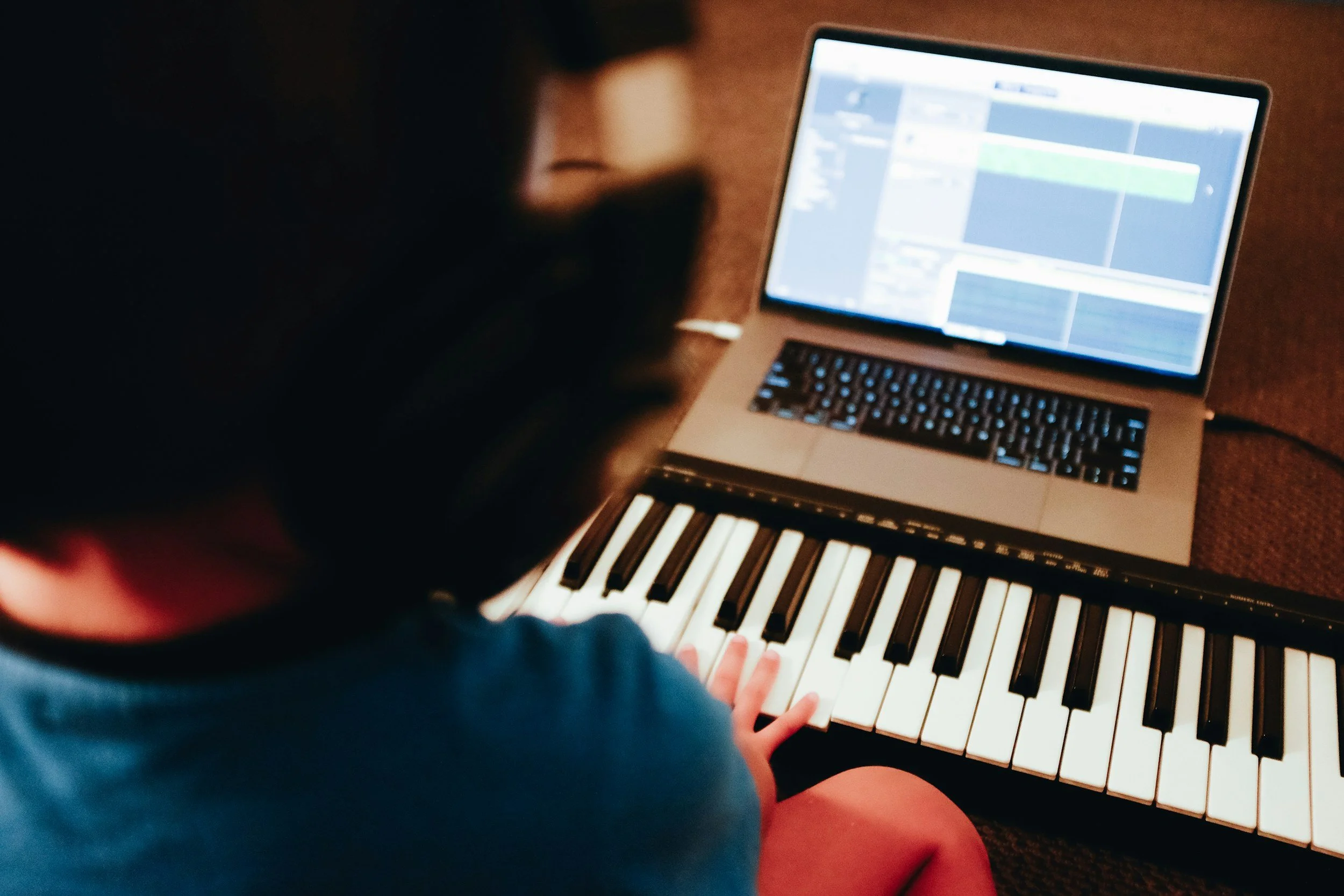
Preliminary A creative beginner pathway introducing pulse, pattern, melody and musical imagination through guided music creation activities.

Grade 1 Developing confidence in creating original music through rhythm, melody, structure and imaginative music-making activities.
Grade 2 Exploring musical development through ostinato, texture, form and creative projects that encourage personal expression
Grade 3 Building creative independence through expanded musical ideas, stylistic awareness and more detailed music creation tasks.
Grade 4 Developing greater control of musical structure, harmony and creative decision-making through a range of original music projects.
Grade 5 Refining creative techniques and musical communication while exploring more sophisticated approaches to original music creation.